“Ready to Die”: England's Doomsday Cult Prepares for the End
England's doomsday cult is openly speaking of "dying" for their leader.


England's doomsday cult is openly speaking of "dying" for their leader.
Be Scofield is a prominent cult reporter whose reporting is cited by the NY Times, Rolling Stone, People, and more. Her work has led to the hit HBO series Love Has Won, as well as Dateline, VICE, the Dr. Phil Show, and a Netflix episode.
SEE ALSO:
12/11/25
By BE SCOFIELD
In an internal lecture this week, a key spokesperson for England's doomsday cult, Alia Muhammad, stood before a room of followers and the leader and delivered a pair of sermons. One was about obedience. The talk was framed as a simple reminder of what it means to “submit to God.” But the three examples she chose to illustrate obedience each involved killing or dying.
“Our true religion is one thing: obedience to the divinely appointed king," Alia explained. "If God is representing himself in a man, then we’re going to leave behind what we know, and we’re going to follow him wherever he’s going… and we’re going to obey him.”
The other talk, posted five days ago, was about patriotism. In it, Alia described the group as the “Divine Just State,” which is their "Eden" or paradise on earth. She told followers that real patriotism means being ready to give their lives for God and for one another. “Don’t we all want to be like those great men and women who gave up their lives and did what they did?” she asked, before urging them to “prepare ourselves… for moments of sacrifice,” moments when they would have to “prove loyalty,” “face a tyrant,” and be “in the line of danger when that moment comes.” At one point she even calls out, “Do you want to be like Lady Zainab? Do you want to be like Bilal?”—two figures revered for enduring torture and sacrificing themselves for their faith. Hands shoot up around the room.
"I shall die in order that my brother lives," Alia quotes. "If you are not like this and more by God, by God, by God, a Divine Just State shall not be established." She then attacks the one thing that could allow followers to not sacrifice: their individuality. "Individuality and self-centeredness create differences, and differences are not a good thing because it is the opposite of unity...When individuals are too worried about their own interests, they can never come together for the greater good of humanity, and they can never be like God."
Later in the same “patriotism” talk, Alia returns to the theme of dying for the cause. “We mentioned Bilal, we mentioned Lady Zainab,” she says. “When things get really tough, being that way is very difficult. It’s difficult, but we want to do that, guys. We want to be able to be at that point.” To get there, she tells them, they have to train for it now: “In order to die for God, in order to give our lives for God, we also have to live for God… we are preparing ourselves in order to be prepared for moments of sacrifice… for moments where you actually have to be in the line of danger when that moment comes.”
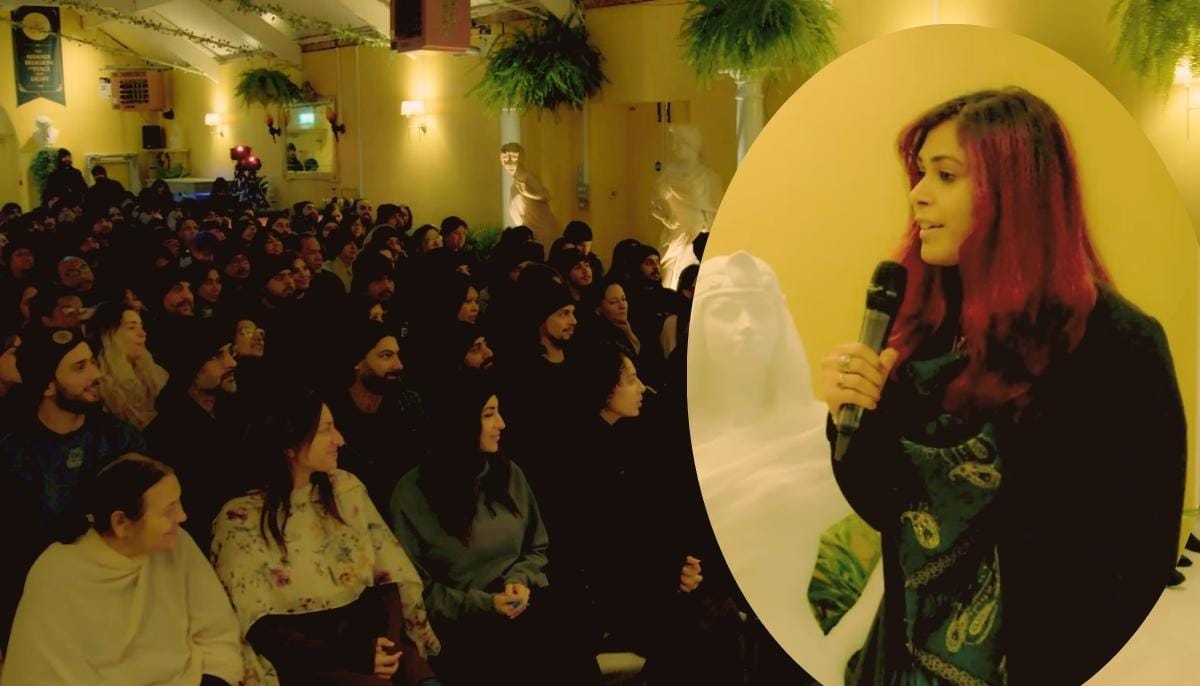
“Discipline is more important than knowledge,” she quotes. Believers, she says, “should be like a beehive… there should be no shame between you. You are all one. If one person makes a mistake, then shame on everyone because you are all one.” Alia spells out what that means: “We have a culture here, guys. We are a Divine Just State. We tell each other when we’re making a mistake, we try to fix one another… if one person makes a mistake, then shame on everyone.” In practice, it is a call for constant monitoring and correction inside a group that is simultaneously teaching its members to be ready to “give our lives for God.”
Over the last nine months I've documented the dark side of this cult, known as the Ahmadi Religion of Peace and Light, led by the American-born messianic figure Abdullah Hashem. The group is a quasi-Islamic, apocalyptic movement headquartered in a former orphanage in Crewe. My previous investigations have documented allegations of sexual abuse, “poison tests” of faith, blood oaths, plans for private communes with their own police and guns, Jonestown-style loyalty drills, and an ideology that divides humanity into godlike “Adamites” and expendable “Cainites.”
"Everyone must prefer everyone over their own selves… I shall die in order that my brother lives."
One week ago the cult uploaded a segment from a podcast to its YouTube channel. In it, U.S. host Diane Bridges favorably discusses Abdullah Hashem and suggests she has spent time around his followers. “His believers would take a bullet for him,” she says. “They’d give their lives for him… that was my sense. And then one of them actually said it.” She sounds impressed: “You’ve really got to be quite a leader to get the people following you to believe in you to that extent—that they would give their lives for yours and feel good about that.”
Bridges explains that Hashem is building a “one world religion” with himself at the head. To join, she says, “You must pledge allegiance to him, not to God, not to Allah—to him as the God-appointed messenger of our time.” Those who refuse are cast as “non-believers.”
 Be Scofield, M.Div
The end-times framework that sits beneath all of this is spelled out in another recent broadcast, “Living in the End Times: Noah’s Ark and Today’s Urgent Call.” In it, two senior presenters explain that we are now living in the moment Jesus warned about in Matthew 24: “For as were the days of Noah, so will be the coming of the son of man.” They tell viewers that just as there was an ark then, “in the time of the son of man, in the end times… there will be another ark and there will be the time of Noah, there will be some kind of flood.” This time, however, it will not be water.
Later in the same episode, the mask comes off. Tracing a line from Cain to the Israelites to those who “keep killing all of the imams,” one host says the story is now reaching its climax: “A giant flood of blood is coming—war, famine, starvation. People are going to eat each other. There’s going to be bombs. The earth is going to start attacking the people.” Against that backdrop, they announce why the group is on TikTok and plastering cities with flags and stickers: “We are warning about the flood of blood that’s coming and the ark of salvation is the family of Muhammad…They are the only chance of salvation, and we are calling you to that.”
The message is brutally simple. The world is about to descend into chaos. Only those who board this particular ark by pledging allegiance to Abdullah Hashem will survive. Inside the ark, sermons now teach that “in order to die for God, in order to give our lives for God, we also have to live for God,” that individuality is an obstacle to sacrifice, and that citizens of the “Divine Just State” should be ready for “moments of sacrifice” when they will have to prove loyalty and stand “in the line of danger.” Outside the ark, a friendly radio host describes followers who would “take a bullet for him” and “give their lives for him”—and says one of them has already said it out loud.
“In order to die for God, in order to give our lives for God, we also have to live for God…”
In one of the cult's recent shows, senior members explain that in their view only followers of Abdullah Hashem will enter paradise; the rest are headed to "hellfire." They describe their faith as the "most special, best religion on the planet" because the founder is here on earth. In another show they talk about how the world needs a cosmic reset: “It needs to be refreshed, it needs to be rebuilt, and the only person that can do that is the son of man who is promised to come, who establishes the kingdom of God in this day and age.”
Many movements talk about the end times. Many venerate martyrs. What is emerging in Crewe is more specific and more volatile: a leader who claims to be God’s final representative, an apocalyptic flood of blood that only his ark can survive, and a community being openly trained to see dying for that ark as the highest expression of faith. This one is rehearsing the ending. What happens when a man who believes the world is ending decides it is time for his followers to step into the line of danger he has spent years preparing them for?